
How a chronic back condition won’t stop Lottie Banks competing
Charlotte Banks completed her ‘retirement run’ last year, but is looking forward to a new challenge as a wheelchair racer

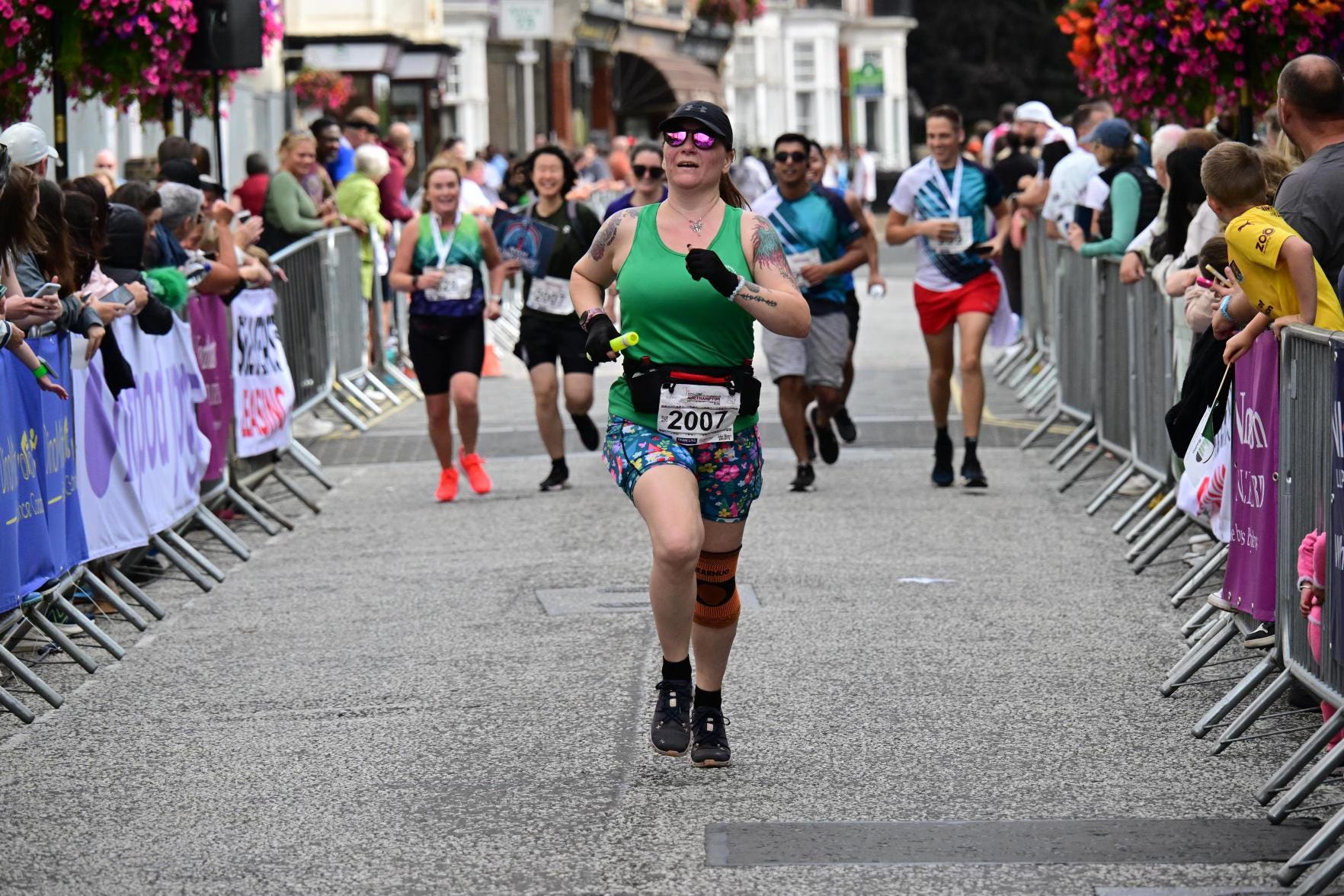
Charlotte Banks is only 50. It’s an age where some people first start to run, and others are looking forward to pounding the pavements and trails for years to come.
But last September, Lottie was forced to take the painful decision to run her ‘Retirement Race’.
A serious back injury, coupled with a chronic musculoskeletal condition, meant London’s Big Half became the final race of her running career.
It was a last celebration of a sport which first captivated Lottie as a strong cross-country athlete at school and re-entered her life when she was in her late-40s.
That return to running was sparked by the injury she suffered following a work incident, and a desire to continue moving even as she battled the pain of fibromyalgia, a condition which causes musculoskeletal pain, fatigue and sleep problems.
It saw Lottie embrace the running community again, fall in love with parkrun, and complete a host of events that included the London Marathon.
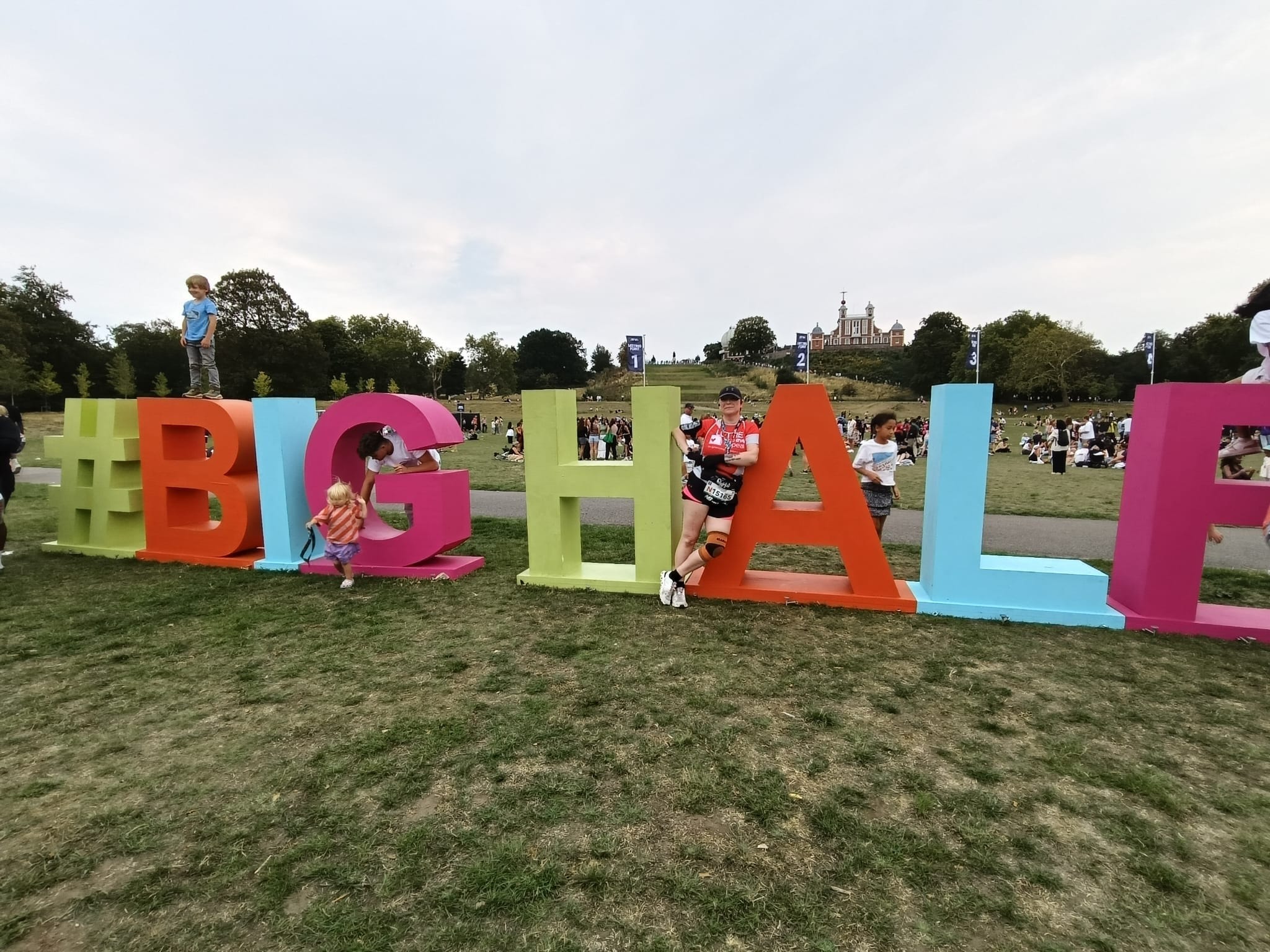
Now, she is turning her attention to a new challenge in wheelchair racing. It is a goal which is providing fresh excitement and solace in the wake of the end of her running days, but comes with not only physical, but financial, pressure.
With the racing wheelchair she needs likely to cost several thousand pounds, Lottie is currently caught in a no man’s land where she can no longer run but doesn’t yet have the ability, or equipment, needed to fully embrace the next stage of her journey.
Support Running Tales:
Please help us keep producing Running Tales across Substack and in podcast form:
The school cross-country star who rediscovered running:
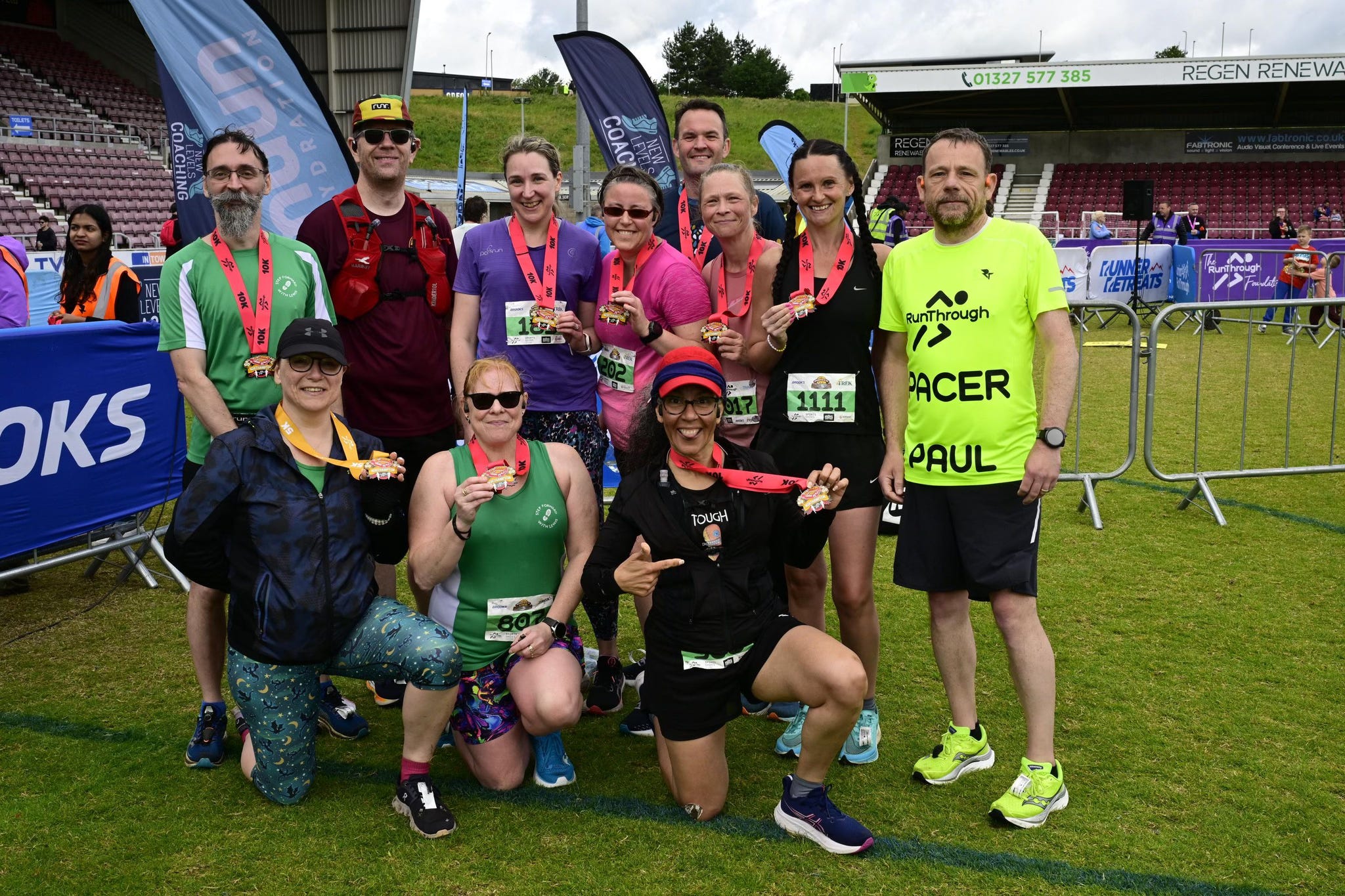
Lottie originally realised she had a passion for running when she was 13 after she took part in a cross-country event at school. She found she not only enjoyed the sport, but excelled at it.
Two appearances at the Junior London Marathon followed, while she had success in county and school events.
“I was really lucky to have that opportunity [to run] while at school,” she said. “We had house competitions for cross-country, athletics, hockey, football, absolutely everything. If there was a sport, we’d just have a competition for it.
“I was head of the athletics cross-country team, but I was horribly obnoxious and arrogant because I never trained. I’d just go out and run, and I’d get bored halfway through a race and overtake everyone before coming first.
“I had a tub filled with medals, mostly gold but with a couple of silvers and bronzes here and there.”
Despite her early success, running fell by the wayside when Lottie decided she wanted to be an artist. It would be years before she would take it up again, a decision sparked by the injury she says has resulted in her spine “falling apart”.
As well as having bulging discs and osteoarthritis, she has problems with her sacroiliac joint, which connects the pelvis and lower spine, that causes her numbness in her legs and lower back.
It means her movement is severely impaired and, unfortunately, several operations aimed at resolving the issue haven’t been effective.
While running has eased the pain caused by her fibromyalgia, helping to prevent her joints seizing up, that spinal injury has made achieving such movement increasingly difficult.
She eventually had to take the “really, really hard” decision to retire her running shoes and look to a future as a wheelchair racer.
“I’ve been in some very, very dark places,” she said. “I’ve gone from a marathon runner to barely being able to walk 50 steps without having to rest, and being in excruciating pain.
“Switching to wheelchair racing has been on my mind for quite some time. I knew it was going to become a thing. But I always said to everyone that was I am going to run for as long as I could.
“And I’m really proud of myself for doing that. I did the London Marathon. I did the Big Half. I’ve got a nice collection of medals on my wall.”
Lottie’s recent achievements also include completing the Great Eastern Run, 10ks in Stratford, Northampton and Leicester, and more than 50 parkruns.
Her ability to run during that time has depended hugely on whether her condition flares up on the day or not, with parkrun times varying from low 30-minute efforts to 50-minute plus walks.
“I’ve had to accept that is part of my conditions,” she said. “At times it has been painful, both physically and mentally. I’ve had to be stubborn to get round some of those parkruns when I’ve only been able to walk.
“There have been some where I’ve started and not been able to finish. It did make me feel absolutely awful. I felt like I’d let myself down, even though it was just parkrun.
“Of course, there’s no pressure on any of it. But it was a pressure I gave to myself to finish 5km, and - of course - that is not a short distance. It’s not a small challenge for most people.”
“Being disabled costs £10,000 a year on top of standard costs of living”:


Since she has had to stop running, Lottie has been determined to continue being involved in the parkrun community, spending time volunteering and supporting friends at the 5km event.
It is something which has brought light into an otherwise dark situation.
She is also currently fundraising for a racing wheelchair to enable her to fully embrace her new goals.
“I’ve had my dark days,” she said, “where I’m just crying because it’s so hard to go from being that runner to a completely stationary and sedentary life.
“But it is the people who have gone through so much of it with me that make the difference. I could stay at home and cry, and feel sorry for myself but that’s not going to help the situation.
“That is not going to get me moving, it’s not going to get me out of the house and it’s certainly not going to give me that willpower to want to carry on and move into wheelchair racing.”
“Wheelchair racing will provide me with new freedom,” she added. “The only thing stopping me at the moment is cost. I don’t think people realise how expensive being disabled can be.
“I’m looking into getting a racing chair, but it can cost several thousand pounds and even a basic one is expensive. Yes, you can buy second hand, but with the type of problems I have with my spine I need to have a chair that is suitable for me and my condition.
“The estimate is that being disabled costs someone £10,000 a year on top of their standard costs of living. It is horrible. We are looking at having to have the entire back half of our house remodeled because I can’t use my kitchen or bathroom properly.
“I currently can’t pursue my favourite hobby, which is collecting shiny medals, because it’s just not in budget.”
Wheelchair racing offers Lottie the hope that she can continue to compete in races and parkruns alongside her running friends for far beyond her fiftieth year, but the freedom she is seeking is not as easy to find as it is for the average runner buying a new pair of trainers.
◾ DONATE TO LOTTIE’S FUNDRAISER: You can help Charlotte Banks pursue her goal to be a wheelchair racer by donating to help her buy a racing chair
Support Running Tales:
Please help us keep producing Running Tales across Substack and in podcast form:

◾TAKE THE BEST PATH: Path Projects offer some of the best running gear in the business.
I love this kit and it looks really cool even on a 48-year-old, decidedly average runner like me!
Visit Path Projects via this link and back Running Tales in the process (affiliate link).